BARKER AND LLEWELLYN
IN THE SHADOWS OF SHERLOCKIANA

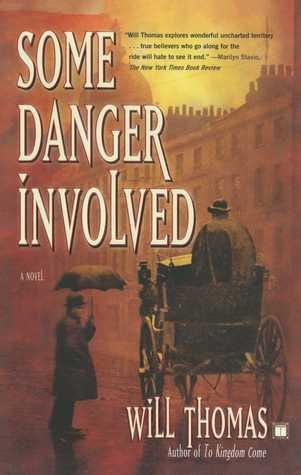
The detective fiction genre has long been shaped by the towering influence of Sir Arthur Conan Doyle’s Sherlock Holmes stories, which established many of the conventions still revered today. Will Thomas’s Barker and Llewellyn novels, while clearly indebted to the Holmes canon, present a fresh reimagining of the Victorian detective duo. Though both series share a fog-draped London setting and familiar narrative framework, they diverge in tone, characterization, thematic focus, and methodology—reflecting both the literary traditions from which they arise and the sensibilities of their respective times. By comparing the two, we can better understand how the detective genre has evolved from its cerebral origins into something more expansive and emotionally textured.
Sherlock Holmes remains the archetype of the rational detective. He is analytical to the point of emotional detachment, using logic and observation to unravel mysteries that often baffle the official police. His investigations are almost always intellectual exercises, built on the smallest trace evidence and the most subtle behavioral cues. Holmes is less a man of the world than a machine for deduction—brilliant, but removed.
Cyrus Barker, by contrast, though equally formidable in intellect, is far more worldly. He carries with him an air of mystery, shaped by a past that includes travel to foreign lands, exposure to Eastern philosophies, and a knowledge of cultures and languages rarely found in the Holmes canon. Barker operates not just as a detective but as a man of action—pragmatic, physically imposing, and sometimes willing to use force. Where Holmes might don a disguise to infiltrate a criminal den, Barker might stride in and take command of the situation. His background in espionage and diplomacy lends a broader scope to his work, linking his investigations to political unrest, foreign intrigue, and London’s multicultural underground.
The differences between the two series are further emphasized by their narrators. Dr. John Watson, Holmes’ friend and biographer, is a war veteran and medical man whose calm and steady voice lends gravity to the tales. Though not unintelligent, Watson is clearly awed by Holmes’ superior intellect and serves primarily as the audience’s surrogate—recounting the cases with admiration and often bewilderment. He is a companion rather than a pupil, a loyal presence who offers moral grounding but rarely interferes with the mechanics of detection.
Thomas Llewellyn, Barker’s assistant and the narrator of Will Thomas’ series, is a different type of figure altogether. Younger and more troubled than Watson, Llewellyn begins as a man with a checkered past—a former boxer, recently released from prison, struggling to find his place. His voice is wittier, more self-deprecating, and at times more emotionally transparent. His narration adds levity and personality to the stories, anchoring the drama with charm and vulnerability. Unlike Watson, Llewellyn is a work in progress, and much of the emotional weight of the series comes from watching his growth under Barker’s mentorship. The relationship is more paternal than collegial, offering a mentorship arc largely absent in the Holmes-Watson dynamic.
As chroniclers—or Boswells—both Watson and Llewellyn fulfill the indispensable role of narrator, observer, and interpreter of their partner’s genius. Watson writes with the reverent tone of a man recording history; his accounts place Holmes on a pedestal, emphasizing his friend’s intellectual superiority and treating the reader to carefully structured moral tales with clean resolutions. Llewellyn, in contrast, offers a more personal, confessional style—his voice is not only that of a biographer but of someone undergoing transformation. While both narrators serve as accessible windows into the world of a brilliant detective, Llewellyn’s account feels more like a memoir of apprenticeship than an impartial chronicle. Where Watson is the loyal recorder, Llewellyn is an active participant, learning from Barker while questioning his own worth and evolving through each experience. This distinction adds narrative depth and emotional development to Thomas’ series, offering readers not just a casebook, but a coming-of-age story.
Arthur Conan Doyle’s writing is steeped in the logic and order of Victorian rationalism. The tone is measured, cerebral, and focused on the problem at hand. Each Holmes story is a puzzle, solved through deduction, forensics, and observation. Emotion is kept at a distance, and the characters often seem secondary to the riddle being unraveled. The world of Holmes is one of high society, academia, and the occasional foray into the criminal underworld—but the focus is always the triumph of reason over disorder.
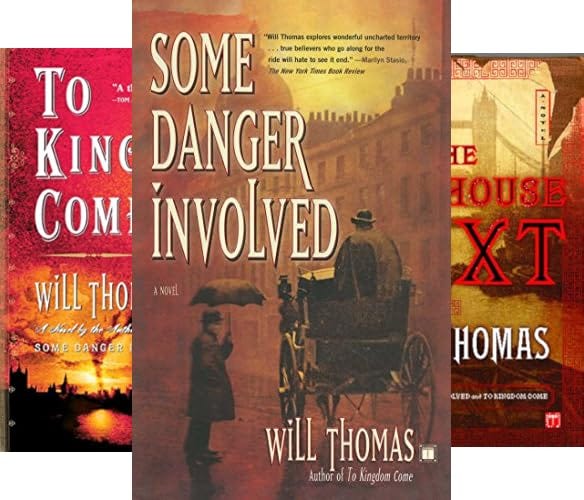
Will Thomas, though writing in a similar historical setting, brings a more modern sensibility to his prose. The Barker and Llewellyn novels preserve the trappings of Victorian London—its fog, carriages, and class structures—but add a richer emotional palette and more emphasis on action. The humor in Llewellyn’s narration lightens the tone, while the stories delve more frequently into questions of morality, loyalty, and personal redemption. There’s also greater investment in world-building. Barker’s connections to shadowy organizations, his home with its sumptuous garden and hidden secrets, and his history as a missionary and spy, all add layers of texture to the world beyond the case at hand.
Another key difference lies in the types of stories told. Holmes’ cases often deal with the crimes and eccentricities of the British upper classes—vanishing nobles, rare gems, secret societies rooted in academic institutions. The focus is tight, and rarely does Holmes engage with the broader socio-political implications of the cases he solves.
Barker and Llewellyn, on the other hand, frequently confront a wider swath of Victorian society. Barker's international experiences and his deep ties to London’s immigrant communities bring cultural diversity to the forefront. Many of the novels incorporate geopolitical intrigue, anarchist movements, Chinese tong wars, or Irish unrest, suggesting a Victorian London teeming with tension and change. Barker is not simply solving crimes—he’s navigating a city at the center of empire, rife with the friction of class, race, and politics.
Holmes’ methods are famously scientific and systematic. He uses forensic techniques, chemical analyses, and logical inference to solve cases. His insights, drawn from the most minute observations, are often startling in their precision. He is, in a sense, the laboratory detective—the thinker in the armchair who makes the invisible visible.
Barker’s methods are broader and more eclectic. He uses his knowledge of people, foreign customs, and martial disciplines to approach problems with a more adaptable and often more visceral toolkit. Where Holmes solves mysteries with deduction, Barker more often solves them through confrontation, infiltration, or negotiation. He is no stranger to violence and maintains a moral code which often puts him directly in harm’s way. His investigative approach blends logic with physical presence, intelligence with pragmatism.
Finally, while both series revolve around the central detective-narrator pairing, the emotional center of Barker and Llewellyn is stronger and more deliberately developed. Holmes and Watson share a deep camaraderie, but the emotional stakes are often muted. Holmes rarely expresses vulnerability, and Watson is consistently steady. In contrast, Barker and Llewellyn’s relationship evolves over the course of the series. Llewellyn’s emotional growth, and Barker’s guarded affection for his young assistant, lend the stories a sense of personal evolution. Themes of trust, redemption, and belonging add depth to their adventures in a way Holmes’ and Watson’s more static relationship does not.
The Barker and Llewellyn novels by Will Thomas pay homage to the Sherlock Holmes canon while expanding upon its foundations. Both series are anchored in the moody, evocative setting of Victorian London and share a love of mystery and intellectual discovery. Yet, while Doyle’s stories remain models of deductive purity and narrative restraint, Thomas offers a more emotionally resonant and culturally diverse vision of the era. Barker is a detective forged by the world, not apart from it; Llewellyn is a narrator with a voice and journey uniquely his own. Together, they reimagine the classic detective duo as something more vulnerable, more dynamic, and ultimately more human—an evolution that reflects the broader transformation of detective fiction from Victorian puzzle-box to modern psychological narrative.
Paul Bishop is the author of fifteen novels, including the award winning Lie Catchers. He is also the editor of 52 Weeks 52 Sherlock Holmes Novels—a multi-author compendium of essays regarding fifty-two of the best Sherlockian pastiches plus much more—Available on Amazon or from Genius Books...
52 Weeks * 52 Sherlock Holmes Novels