IRENE ADLER PART 4
OTHER IRENE ADLER NOVELS AND PASTICHES

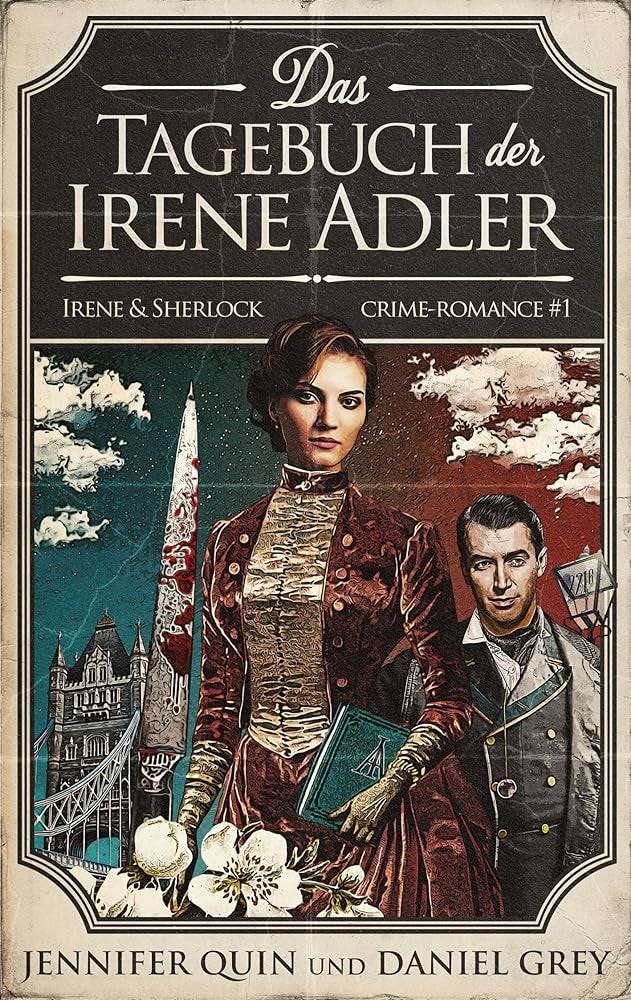
Carole Nelson Douglas may have been the first to give Irene Adler a full-fledged book series, and Claire Andrews the most recent to recast Irene for a YA audience, but they are hardly alone in seeing the potential of the woman. Over the decades, other writers have placed Irene at the center of their pastiches, anthologies, or standalone novels, each experimenting with how her character might unfold once freed from Doyle’s brevity.
Some of these portrayals lean into the romantic potential Doyle himself carefully avoided. In a number of pastiches, Irene is recast as Holmes’ elusive great love—the one woman capable of stirring emotion in his otherwise rational heart. This interpretation has proven popular in stories wanting to humanize Holmes by giving him a passion he cannot suppress. While Doyle offered no evidence for such a romance, the narrative temptation is hard to resist. Authors from the mid-twentieth century onward often indulged it, turning Irene into a figure who challenges not only Holmes’ intellect but also his detachment.
Other writers have been drawn to Irene as a figure of intrigue and espionage. In anthologies such as The Mammoth Book of New Sherlock Holmes Adventures or smaller collections of Holmes pastiches, she occasionally surfaces as a shadowy operative, maneuvering behind the scenes of political conspiracies. This vision of Adler as a spy—worldly, multilingual, adept at disguise—fits naturally with her canonical background as a cosmopolitan opera singer, accustomed to moving in elite circles. It also allows her to inhabit morally ambiguous territory—sometimes ally, sometimes adversary, sometimes both.
In still other reinventions, Irene becomes a detective in her own right, often working parallel to Holmes. Writers intrigued by the idea of her solving mysteries deploy her not as a rival but as a counterpart, highlighting how differently a woman might approach deduction in the Victorian era. These stories frequently emphasize her social intelligence, such as her ability to navigate drawing rooms, or to read people rather than just footprints or cigar ash. Such skills, undervalued by Holmes’ rigid rationalism, give her a distinctive edge.
Even short appearances can carry weight. In anthologies dedicated to feminist retellings of classic tales, Irene has occasionally cropped up as a figure who represents independence and wit. In these contexts, she serves as a symbolic bridge between Victorian detective fiction and modern feminist storytelling, embodying the idea women relegated to the margins of canonical texts can be brought into the light.
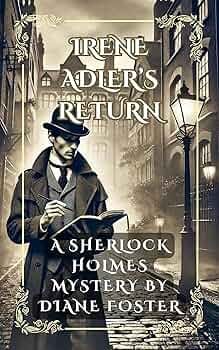
Beyond print, small-press and self-published authors have also embraced Irene as a heroine. Digital publishing platforms are full of novellas and short stories where she takes on cases, sometimes with Holmes, sometimes without. These works may lack the visibility of Douglas’ series or Andrews’ YA novels, but they testify to the ongoing hunger for Irene-centered storytelling. Every writer who returns to her demonstrates anew how much narrative space remains around her single canonical appearance.
It’s telling that Irene appears in such a wide variety of guises—detective, spy, lover, adventuress. This elasticity is precisely why she thrives in pastiche. Where Holmes is constrained by the expectations of his archetype—the aloof logician, the master of deduction—Irene is free to evolve. With so little fixed about her, she can be reinvented endlessly, reflecting the preoccupations of each cultural moment.
These literary experiments paved the way for her most visible reincarnations, the versions of Irene Adler who have appeared on screens large and small. In film and television, Irene has enjoyed perhaps her widest audience, and her transformations there reveal as much about modern attitudes toward Holmes as they do about her. You'll find out more about these appearances in the next Sherlock Adjacent blog post...
Paul Bishop is the author of fifteen novels, including the award winning Lie Catchers. He is also the editor of 52 Weeks 52 Sherlock Holmes Novels—a multi-author compendium of essays regarding fifty-two of the best Sherlockian pastiches plus much more—Available on Amazon or from Genius Books...
52 Weeks * 52 Sherlock Holmes Novels