
SHERLOCKIAN PARODY
THE PERFECT TARGET FOR SATIRE

Literary devices often blur boundaries, especially when authors draw inspiration from iconic works. Two frequently conflated but fundamentally distinct modes of homage are pastiche and parody. While both echo the styles and themes of earlier works, their intentions, tones, and effects diverge sharply. Nowhere is this clearer—or more richly demonstrated—than in the countless reimaginings of the Sherlock Holmes canon. The detective of 221B Baker Street has been celebrated, satirized, and spoofed for well over a century, making the Holmesian universe a fertile ground for both pastiche and parody.
Pastiche is a literary or artistic work that imitates the style, character, or themes of another, often to honor or expand upon it. In pastiche, there is no mockery—only affection and reverence. It is a sincere attempt to continue a beloved tradition, often with new stories written in the style of the original, extending its legacy.
By contrast, parody is inherently satirical. It exaggerates, mocks, or ridicules the conventions, tropes, or mannerisms of the original work. Though parody can be affectionate and is often produced by those familiar with and even fond of the original, its purpose is humorous critique rather than faithful continuation.
In terms of Sherlock Holmes, pastiche includes serious efforts like Laurie R. King’s Mary Russell series or Nicholas Meyer’s The Seven-Per-Cent Solution. Parody, however, includes humorous retellings that lampoon Holmes’ eccentricities, Watson’s plodding admiration, or the convoluted nature of Conan Doyle’s plots.
Sherlock Holmes may be the most parodied fictional character in English literature, with such spoofs beginning almost immediately after his first appearance in The Strand magazine. By the time Arthur Conan Doyle killed off Holmes at the Reichenbach Falls in 1893, the detective had already become the subject of affectionate satire. In fact, early parodies likely helped cement Holmes’ place in popular culture by demonstrating just how recognizable his mannerisms had become.
Early Holmes parodies were often short pieces published in newspapers or magazines. One of the first and most famous is J.M. Barrie’s The Adventure of the Two Collaborators (1893), which humorously imagines Holmes investigating Conan Doyle himself. Similarly, Bret Harte’s The Stolen Cigar-Case (1902) introduced Hemlock Jones, a brilliantly dim detective who turns every deduction into absurdity.
These early efforts targeted both Holmes’ exaggerated brilliance and Watson’s near-worshipful narration. They were less about plot and more about voice and character—mocking Holmes’ aloofness, Watson’s credulity, and the often baroque resolutions of the mysteries.
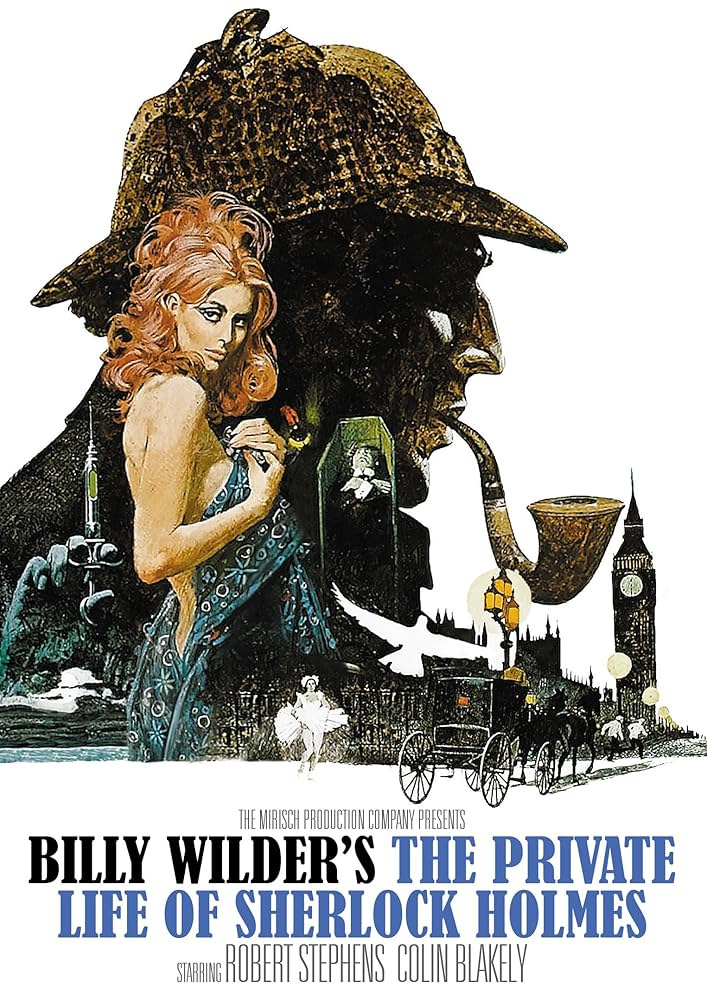
The mid-20th century saw Holmes become a cultural archetype, and his parodies extended into visual media. The 1930s and 1940s, in particular, witnessed a boom in detective fiction and its send-ups. The film Sherlock Holmes Faces Death (1943) was played straight, but the comedic potential was clear. The Private Life of Sherlock Holmes (1970), directed by Billy Wilder, blends parody and homage, portraying Holmes as melancholic and flawed, undercutting the legend while maintaining respect.
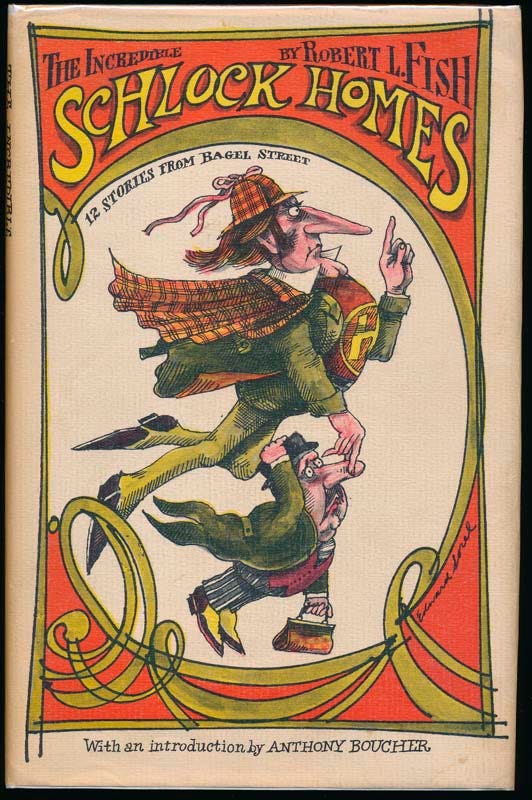
In literature, writers like Robert L. Fish introduced intentionally bumbling Holmes stand-ins, such as Schlock Homes in The Memoirs of Schlock Homes (1966). These stories revel in wordplay and puns, and while formulaic, they lovingly spoof the tropes of Doyle’s work.
In more recent decades, parody has become more meta-textual, often poking fun at not just Holmes himself but at the entire Sherlockian subculture. Douglas Adams’ Dirk Gently series plays with Holmesian logic and the concept of interconnected clues, spiraling into comedic absurdity.
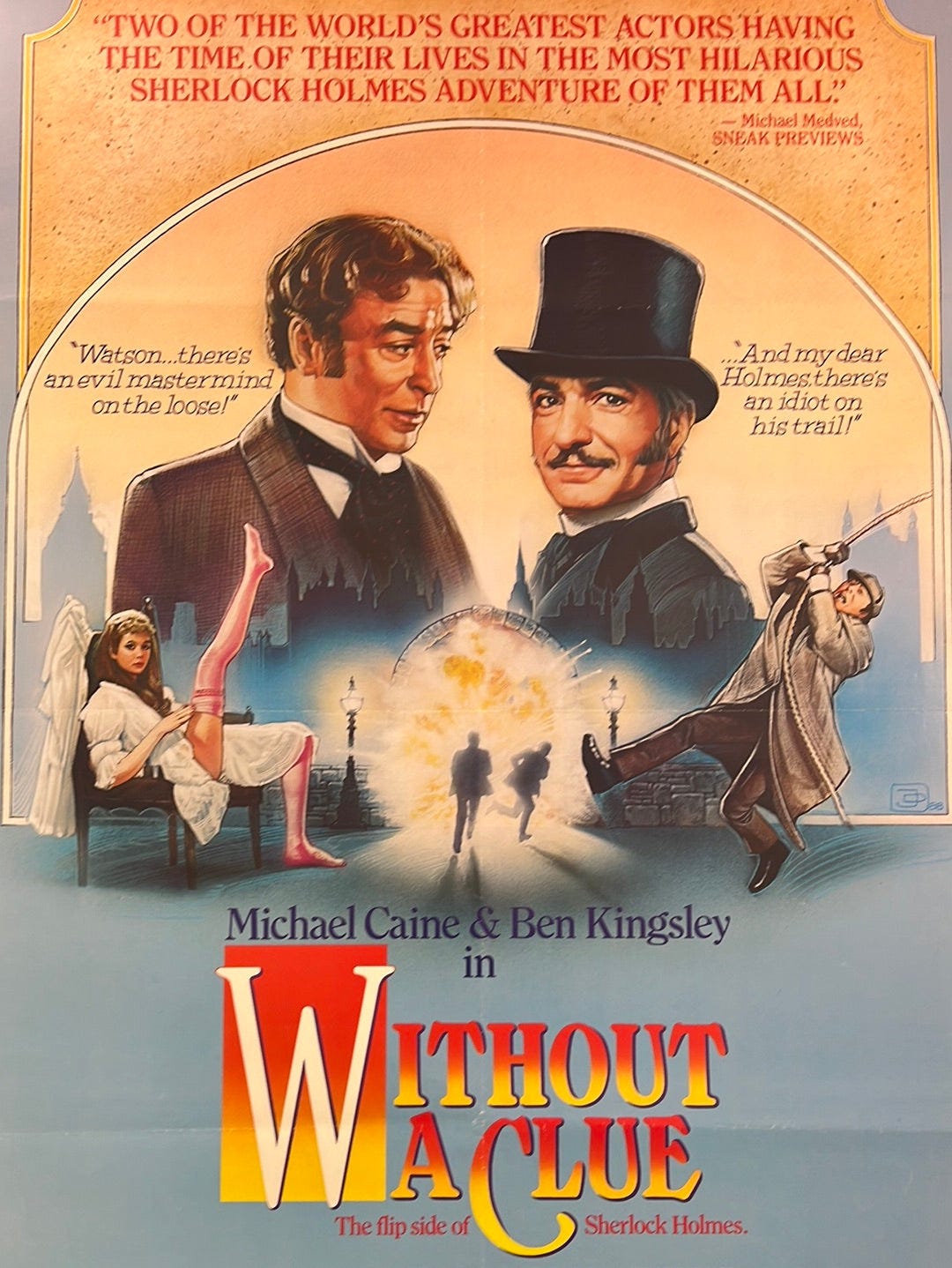
Perhaps the most high-profile modern parody is the movie Without a Clue (1988), which imagines Watson as the real detective genius and Holmes as a hired actor played by Michael Caine. This film critiques not just Holmes but the way he has been mythologized—turning the entire canon on its head.
On television, the British sketch comedy That Mitchell and Webb Look offered a wonderfully absurd take where Holmes' deductions are bizarrely literal and unhelpful (…you have a dog with a limp who enjoys opera), satirizing the deductive leaps so central to the stories.
Online fandom has also generated a wealth of parody, especially in fanfiction and YouTube sketches, which tend to mock the homoerotic subtext, the endless reboots, and Holmes’ social dysfunction in modern settings.
Ranking the best parodies of Sherlock Holmes depends on criteria—in this case, fidelity to the original, cleverness of critique, originality, and enduring appeal. Here are five standout examples, rated and contextualized:
1. Without a Clue (1988) – ★★★★★
This film flips the Holmes-Watson dynamic in a masterstroke of comedic inversion. Watson (Ben Kingsley) is the real detective, while Holmes (Michael Caine) is a vain actor pretending to be brilliant. The film blends physical comedy, clever dialogue, and affectionate satire. It’s arguably the gold standard of Sherlockian parody for its originality and smart commentary on the mythologizing of Holmes.
2. The Private Life of Sherlock Holmes (1970) – ★★★★½
While more of a hybrid than pure parody, Billy Wilder’s film gently mocks the legend while also deepening it. By exploring Holmes’ possible romantic repression and his complex personality, it both satirizes and humanizes him. The subtle wit and melancholy tone make this a sophisticated critique disguised as character study.
3. The Memoirs of Schlock Homes by Robert L. Fish – ★★★★
These short stories are pure parody, each title a pun and each mystery a nonsensical send-up of Conan Doyle’s logic. Fish understands the tone and rhythm of Watson’s narration, which he imitates to hilarious effect. While the humor may feel dated to some, it’s a masterclass in comic pastiche.
4. That Mitchell and Webb Look—Sherlock Sketches – ★★★★
These short comedy sketches offer distilled, absurdist takes on Holmes’s character. One skit has Holmes making deductions so ridiculous they become unhinged, while Watson tries in vain to follow. The rapid-fire, intelligent mockery showcases how easily the Holmes formula can be bent to absurdity.
5. The Stolen Cigar-Case by Bret Harte – ★★★½
As one of the earliest parodies, this short story deserves credit for establishing many spoof conventions: the obliviously brilliant detective, the dense Watson analog, and convoluted cases leading nowhere. It remains clever, though some of its humor may be too Victorian for modern readers.
Sherlock Holmes, as a cultural icon, invites both reverence and ridicule. The line between pastiche and parody often blurs—especially when satire is delivered with affection. But parody serves a distinct function: it deflates the myth just enough to remind us that Holmes is a creation, not a god. In doing so, it refreshes our appreciation, keeping the legend vibrant by showing its limits and absurdities.
The best Sherlockian parodies are not just funny—they are acts of literary criticism. They illuminate the tropes, clichés, and psychological quirks that have made Holmes simultaneously brilliant and ludicrous for over a century. Whether through a bumbling detective named Schlock or a fictional actor named Reginald Kincaid pretending to be Holmes, parody keeps the game afoot—but with a wink and a grin...
Paul Bishop is the author of fifteen novels, including the award winning Lie Catchers. He is also the editor of 52 Weeks 52 Sherlock Holmes Novels—a multi-author compendium of essays regarding fifty-two of the best Sherlockian pastiches plus much more—Available on Amazon or from Genius Books...
52 Weeks * 52 Sherlock Holmes Novels
Without A Clue is the only worthy Holmes comedy... and likely to remain so of later efforts are anything to go by.
Great list. Thanks!